
Char Dham Yatra
- Yamunotri, Gangotri, Kedarnath, Badrinath
- 10 Days
- 9 Nights
Overview
The Uttarakhand Char Dham Yatra is one of the most sacred pilgrimages in Hinduism, comprising four revered shrines nestled in the majestic Himalayas of Uttarakhand—Yamunotri Temple, Gangotri Temple, Kedarnath Temple, and Badrinath Temple.
The journey traditionally begins at Yamunotri, followed by Gangotri and Kedarnath, and concludes at Badrinath. Dedicated respectively to Goddess Yamuna, Goddess Ganga, Lord Shiva, and Lord Vishnu, the Char Dham Yatra is believed to cleanse one’s soul and pave the way toward spiritual liberation (moksha).
Spiritual Significance
The Char Dham Yatra represents a journey of faith, devotion, and self-discovery through the sacred Himalayas. Every year, millions of devotees undertake this pilgrimage in search of divine blessings, inner peace, and spiritual fulfillment.
“A pilgrimage to the Char Dham is not merely a journey through the mountains, but a sacred path toward devotion and enlightenment.”
Best Time to Visit: May to October (subject to weather conditions and temple opening dates).
Nearest Airport: Jolly Grant Airport
Starting Point: Haridwar or Rishikesh
Day 1: Haridwar – Barkot (210 km / 8–9 hrs)
Arrival & Transfer:
In the early morning, pickup from Haridwar and drive to Barkot via Mussoorie.
Sightseeing:
En route, visit:
- Mussoorie Lake
- Kempty Falls
Transfer:
After lunch at Kempty Falls, continue the drive to Barkot.
Hotel Check-in:
Check in to the hotel upon arrival.
Evening:
The rest of the day is free to relax and store your energy for the Yamunotri Temple visit the next day.
Overnight Stay:
Overnight stay in Barkot.
Barkot Weather:
Generally pleasant in summer, with temperatures ranging from 25°C to 30°C. During winter, the days remain pleasantly cool, while the nights are cold, with temperatures ranging from 10°C to 5°C.
Day 2: Barkot – Yamunotri – Barkot (36 km Drive & 6 km Trek One Way)
Transfer:
Early morning, drive to Jankichatti/Phoolchatti.
Trek & Spiritual Visit:
From here, begin the 6 km trek to Yamunotri. The trek can be undertaken on foot, by horse, or by doli (at own cost). The route passes through lush green valleys, conifer forests, rhododendrons, cacti, and various Himalayan shrubs.
Upon arrival at Yamunotri:
- Offer prayers at Divya Shila.
- Take a holy bath in Jamunabai Kund.
- Have darshan of Yamunaji.
Transfer:
After darshan, return to Barkot.
Overnight Stay:
Overnight stay in Barkot.
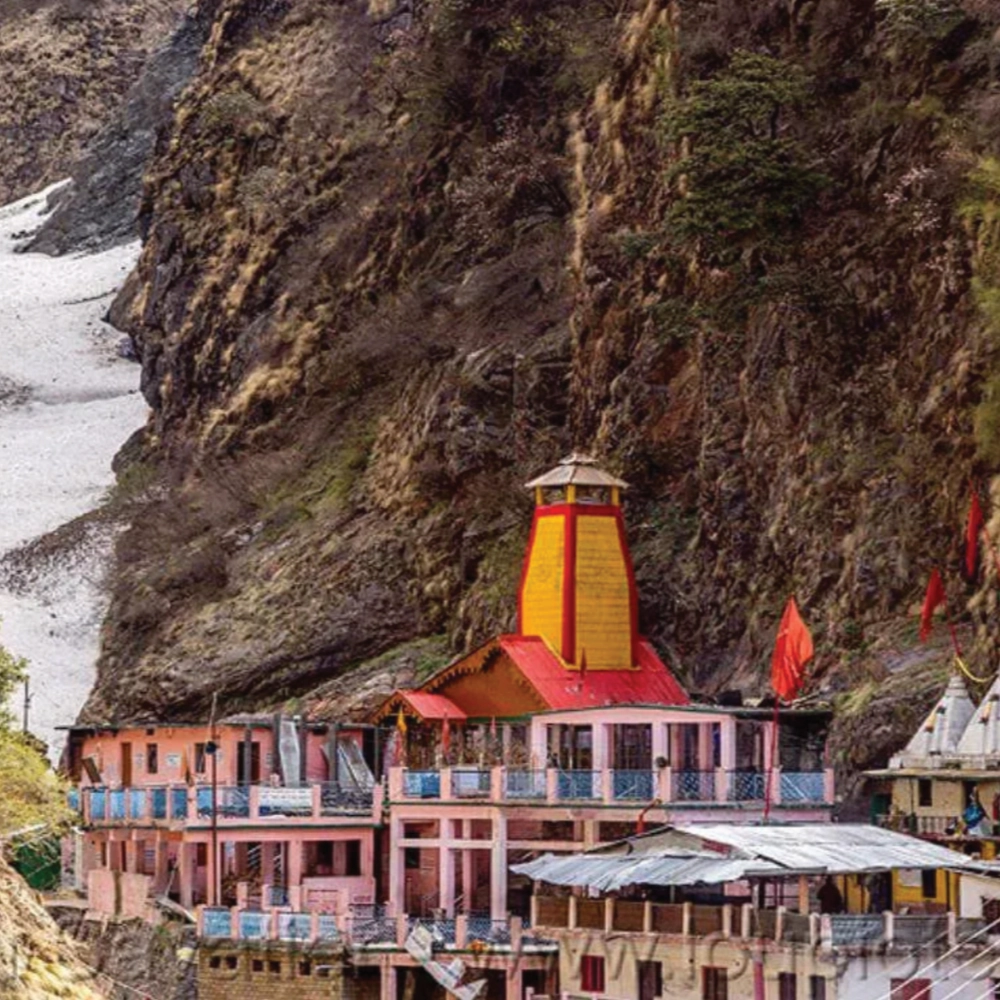
Yamunotri Temple:
Maharani Gularia of Jaipur built the temple in the 19th century. The temple was destroyed twice during the present century and rebuilt thereafter. At Yamunotri, devotees can cook rice by tying it in a cloth and dipping it into the hot waters of Tapt Kund. This cooked rice is taken home as prasad. Pilgrims also offer prayers at Divya Shila near the temple.
Surya Kund:
Several thermal springs are located near the temple and flow into different pools. The most important among them is Surya Kund.
Yamunotri Weather:
During summer, temperatures range between 10°C and 18°C. The days remain pleasantly cool, while the nights can be cold.
Day 3: Barkot – Uttarkashi (80 km / 2 hrs)
Transfer:
After breakfast, proceed towards Uttarkashi.
Hotel Check-in:
Check in to the hotel upon arrival.
Spiritual Visit:
Visit Kashi Vishwanath Temple.
Overnight Stay:
Overnight stay in Uttarkashi.
About Uttarkashi:
Uttarkashi is an ancient town with a rich cultural heritage. As the name suggests, it is considered the Kashi of the North and is held in high reverence, much like Varanasi. Both towns are situated on the banks of the sacred Ganga River. Uttarkashi lies between the rivers Syalam Gad (Varuna) and Kaligad (Asi). One of its holiest ghats is Manikarnika, similar to the famous Manikarnika Ghat in Varanasi. The town is home to numerous temples and ashrams.
Vishwanath Temple & Massive Iron Trishul:
The Vishwanath Temple is one of the oldest Shiva temples in India. It was reconstructed in 1857 by Maharani Khaneti Devi of Tehri State in the ancient architectural style and is located in the heart of the town. A massive iron Trishul, symbolizing the Divine Mother, has been worshipped here since ancient times. The temple complex also includes shrines dedicated to Ganeshji, Sakshi Gopal, and Markandeya Rishi. Akhand Jyoti, Akhand Abhishek, and Vishesh Aarti are performed regularly. According to the Skanda Purana, Uttarkashi is known as “Saumya Varanasi,” the abode of Lord Shiva in Kaliyug.
Shakti Temple:
Located directly opposite the Vishwanath Temple, the Shakti Temple houses a massive Trishul measuring approximately 6 meters in height and 90 cm in circumference at the base. The upper portion appears to be made of iron, while the lower portion is copper. According to mythology, Goddess Durga used this divine weapon against demons.
Uttarkashi Weather:
Summer temperatures generally range from 30°C to 35°C, while the nights remain pleasant. Winters are cold.
Day 4: Uttarkashi – Gangotri – Uttarkashi (100 km / 2 hrs)
Transfer:
Early morning, depart for Gangotri with packed breakfast.
Spiritual Visit & Sightseeing:
En route, take a holy dip in Garam Kund at Gangnani and continue through the beautiful Harsil Valley.
About Harsil:
Harsil is renowned for its natural beauty, majestic deodar forests, and breathtaking mountain views.
Spiritual Visit:
Upon arrival at Gangotri:
- Take a holy dip in the sacred River Ganga.
- Perform puja and darshan.
- Spend some peaceful time in the temple surroundings.
Transfer:
Return to Uttarkashi after darshan.
Overnight Stay:
Overnight stay in Uttarkashi.
Gangotri Temple:
The Gangotri Temple was constructed in the 18th century by Gorkha General Amar Singh Thapa. It is situated on the right bank of the Bhagirathi River.
Gangotri Weather:
During summer, temperatures may reach up to 20°C, while nighttime temperatures can drop to around 10°C. Light woollen clothing is recommended. During winter, Gangotri experiences heavy snowfall, and the temple remains closed.
Day 5: Uttarkashi – Guptkashi (200 km / 7 hrs)
Transfer:
After breakfast, drive to Guptkashi via Moolgarh and Lambgaon.
Sightseeing:
En route, witness the Mandakini River at Tilwara. The river originates from Kedarnath.
Spiritual Visit:
Visit the Ardh Narishwar Temple.
Hotel Check-in:
Check in to the hotel upon arrival.
Overnight Stay:
Overnight stay in Guptkashi.
About Guptkashi:
According to mythology, when the Pandavas were searching for Lord Shiva, he initially concealed himself in Guptkashi before later appearing at Kedarnath.
Guptkashi Weather:
The weather remains pleasant during summer, with temperatures ranging from 25°C to 30°C. Winters are cold.
Day 6: Guptkashi – Sonprayag (30 km) – Gaurikund (5 km) – Kedarnath (19 km Trek)
Transfer:
After breakfast, proceed towards Kedarnath Dham. The vehicle will drop you at Sonprayag, from where you will take a local jeep to Gaurikund.
Trek & Spiritual Visit:
Begin the 19 km trek to Kedarnath. The trek can be completed on foot, by horse, or by doli (at own cost).
Upon arrival, have darshan at Kedarnath Temple.
Overnight Stay:
Overnight stay in Kedarnath.
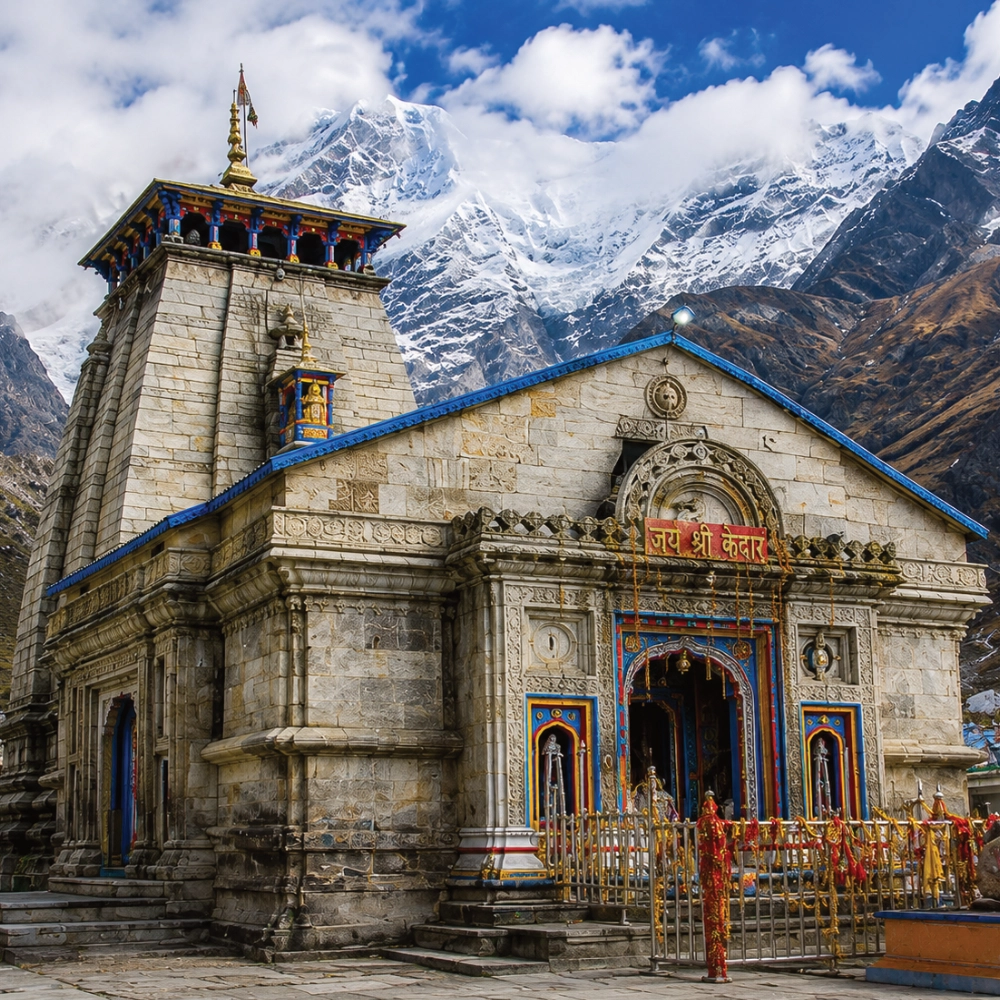
Kedarnath Temple:
Kedarnath is one of the twelve sacred Jyotirlingas of Lord Shiva and is situated against the backdrop of the majestic Kedarnath range. According to legend, Lord Shiva assumed the form of a bull to avoid the Pandavas and disappeared into the ground, leaving his hump visible at Kedarnath.
Kedarnath Weather:
Due to its high altitude, Kedarnath remains cold throughout the year. Summers are cool and pleasant, while winters are severe, with temperatures often dropping to around 0°C. Warm woollen clothing is essential.
Day 7: Kedarnath – Gaurikund (19 km trek) – Sonprayag – Guptkashi
Transfer:
After breakfast, check out from Kedarnath and begin the trek back to Gaurikund and Sonprayag.
Transfer:
Meet the driver at the designated point and proceed to Guptkashi.
Overnight Stay:
Overnight stay in Guptkashi.
Day 8: Guptkashi – Badrinath (150 km / 5 hrs)
Transfer:
After breakfast, drive to Badrinath Dham.
Spiritual Visit:
En route, visit Narsingh Temple in Joshimath.
Hotel Check-in:
Check in to the hotel upon arrival.
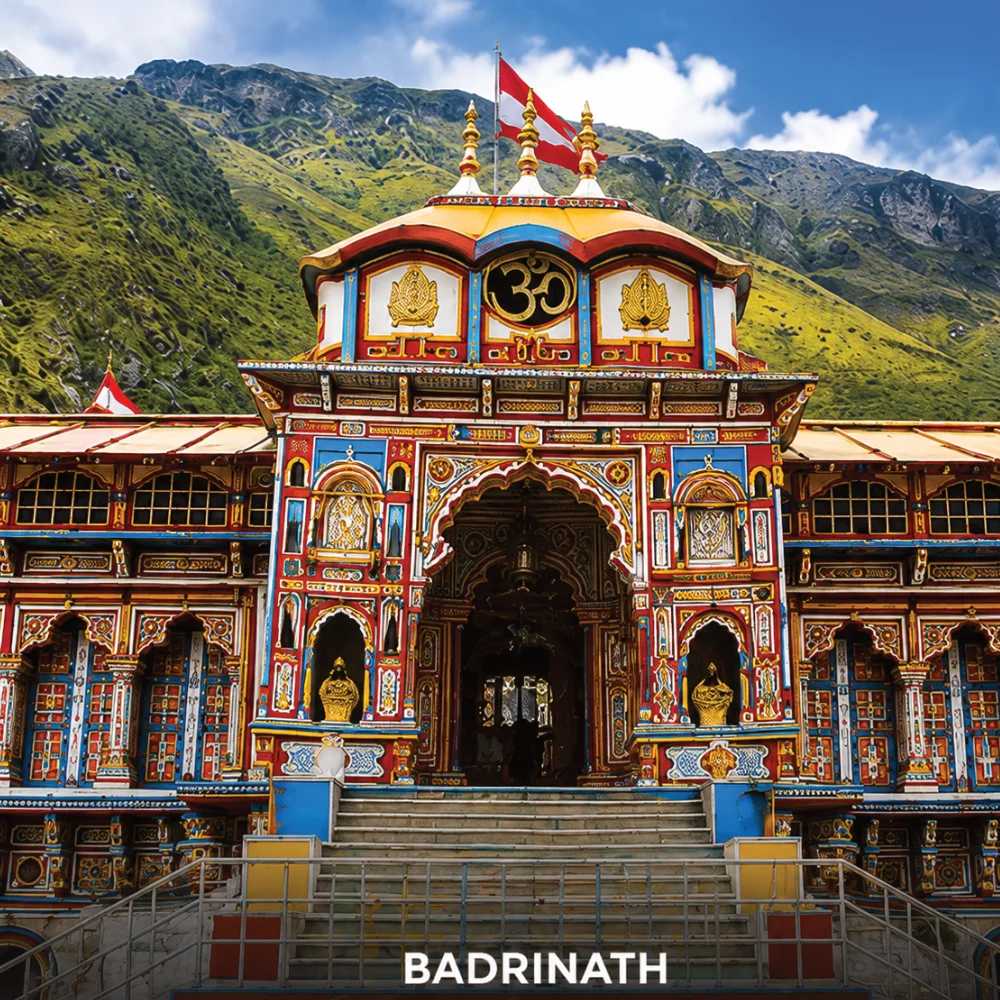
Spiritual Visit:
In the evening, after taking a bath in Tapt Kund:
- Have darshan of Badrivishal.
- Attend the evening Aarti.
Sightseeing:
Nearby attractions include:
- Mana Village
- Vyas Gufa
- Mata Murti Temple
- Charan Paduka
- Bhim Shila
- Origin point of the Saraswati River
Overnight Stay:
Overnight stay in Badrinath.
Day 9: Badrinath – Rudraprayag / Srinagar (186 km / 7 hrs)
Transfer:
After breakfast, drive towards Srinagar.
Spiritual Visit:
En route, visit Rudranath Temple in Rudraprayag.
Hotel Check-in:
Check in to the hotel upon arrival.
Overnight Stay:
Overnight stay in Srinagar.
Day 10: Srinagar – Haridwar (275 km / 8 hrs)
Inclusions:
- Triple & quad sharing accommodation in mentioned or similar hotels
- Pickup and drop ex-Haridwar with local sightseeing
- Meal plan: MAPAI (Breakfast and Dinner)
- Complimentary for children below 5 years (without extra bed)
- Children between 5–10 years get a 5% discount (without extra bed)
Exclusions:
- Any increase in government taxes affecting land arrangements before departure
- Personal expenses such as telephone, laundry, room service, parking, insurance, porterage, etc.
- Meals not mentioned in the itinerary
- Helicopter tickets
- Expenses due to bad weather, landslides, road closures, or other natural conditions
- Any service not mentioned under “Tour Cost Includes.
- Any other expenses incurred due to bad weather, road closures, landslides and anything not specified in the cost.